


In the Amazon region, frail ecosystems and Indigenous communities are under constant pressure.
Technology is part of the problem. But it’s also the key to a better future.
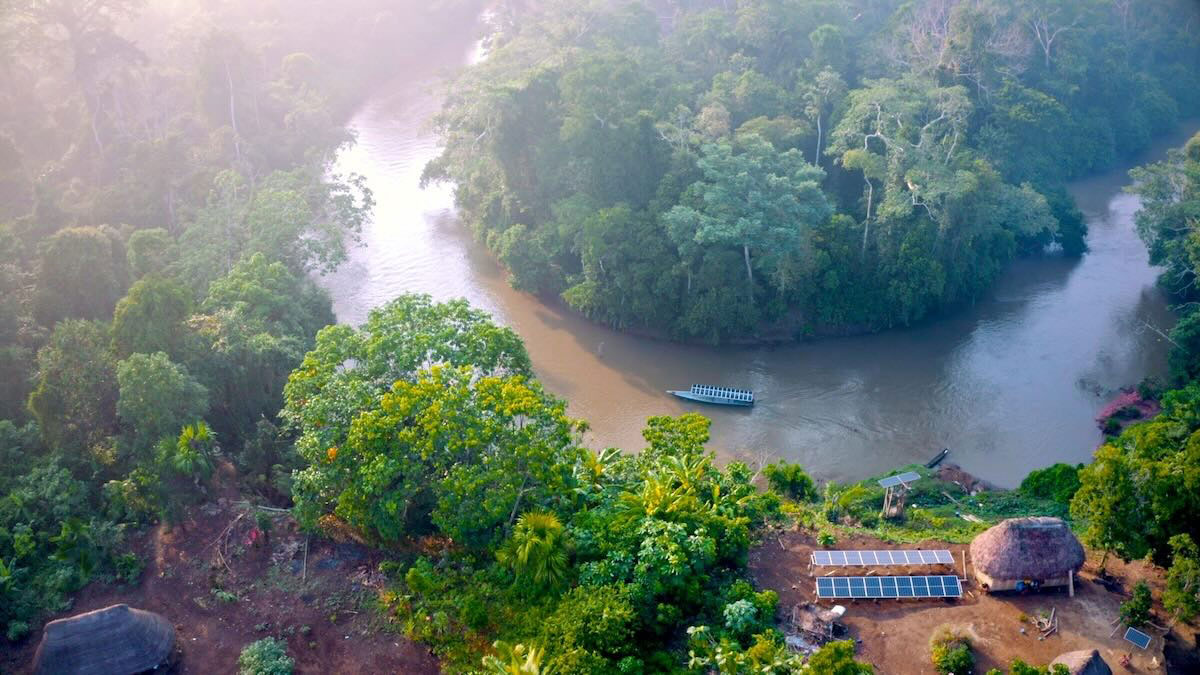
That’s why Kara Solar is so critical to river communities in Ecuador, Peru, and Brazil. Unlike gas-powered vessels, its solar-powered boats glide silently and cleanly, with nary a disturbance to rare birds or river dolphins. And in a region where roads are scarce — and can be harmful to the rainforest when they are built — the boats support everything from school attendance and eco-tourism to healthcare and social cohesion.
With Cisco support and technology, Kara Solar is providing more sustainable river transportation — and more recently, solar-powered networking, microgrids, and locally manufactured boat motors. Along the way, Quito-based Kara Solar is also creating new economic opportunities for Indigenous people looking beyond potentially harmful practices like clear-cut logging and unregulated fishing.
“Indigenous communities that want to develop themselves, that want to strengthen local capacity for economic development, need solar energy,” said Nantu Canelos, president and territorial director of Kara Solar and a leader in the Indigenous Achuar communities of Ecuador. “This is the mission of Kara Solar.”
Oliver Utne is Kara Solar’s founder and executive director. A Minnesotan, he first came to the Amazon region to teach English in 2007.
“I saw how logistically challenging the Amazon is and how much money is spent on gasoline,” Utne recounted. “I also saw how damaging to Indigenous communities and the Amazon ecosystem it can be. Solar seemed to me to have tremendous promise.”
Kara Solar was formally launched in 2018. And it was one of the first nonprofits to receive funding from the Cisco Foundation after it pledged $100 million to climate-resilience work around the world in 2021
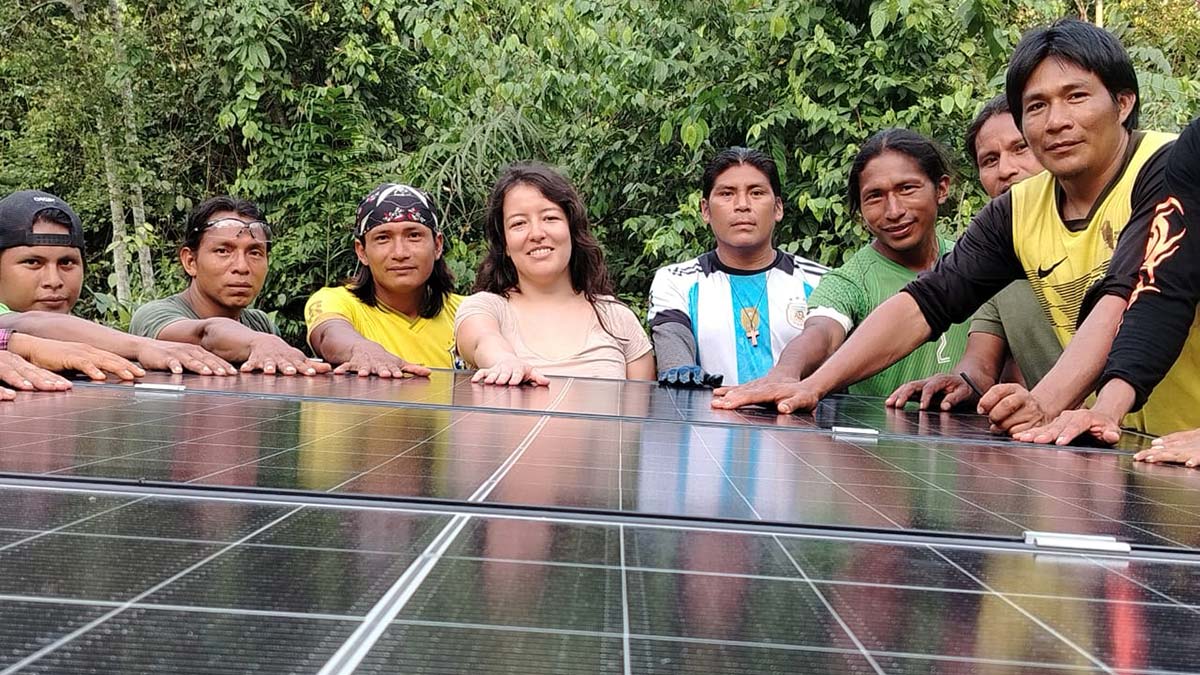
Achuar Kara Solar technicians who installed a solar system for the Wayusentsa Community Tourism Center.
Photographer: Luciano Peas
A vision of resilience and independence
The cost and logistics of gasoline and diesel became particularly acute during the COVID pandemic, when prices spiked and fuel deliveries were limited. But the solar-powered boats provided a lifeline, a role they continue to play today.
“Sometimes families don't have money to pay for gasoline,” said Canelos. “And so, the solar boats help families get services, especially those who live far away up the river. The boats pick up students and bring them to schools, and they bring sick patients to the health center.”
The Cisco Foundation is all about supporting startups and communities to solve key challenges in scalable ways. So, Kara Solar fit the bill, as Alex Wilkins, a manager with the Cisco Foundation and the Social Impact and Sustainability Office, explained.
“I have learned that Kara is an Achuar word meaning ‘vision that becomes real’,” Wilkins explained. “And Kara Solar is a vision of a solar future that we wanted to support. The Cisco Foundation approach is to support our partners as they continue to build and scale their vision. Kara Solar is building environmental and economic resilience.”
As Utne affirmed, independence and local ownership are key goals.
“Kara Solar is not about immediate, massive scaling,” he said, “We care about integrity, person-to-person growth, and real local ownership — so we’re looking long term, to first build a really solid foundation.”
Resilience and independence demand a multi-front strategy. And from its initial focus on river transportation, Kara Solar’s expansion into connectivity and solar microgrids has underscored the demand for skills and training.
“Technology that’s simple, robust, and repairable, like we’re building, is a huge part of the solution,” Utne stressed. “But it needs to be accompanied with social awareness in terms of equipping people with the knowledge to maintain it and also the ownership and the governance to use it for the ultimate goal: protecting the rainforest and the culture.”
To that end, Kara Solar’s training programs have engaged over 20 Indigenous nations in the Amazon region, enhancing local knowledge and technology maintenance.
“It's really important that these systems remain self-managed by the communities,” Canelos emphasized. “And so, building the local capacity to do that and not always rely on outside experts is really important.”
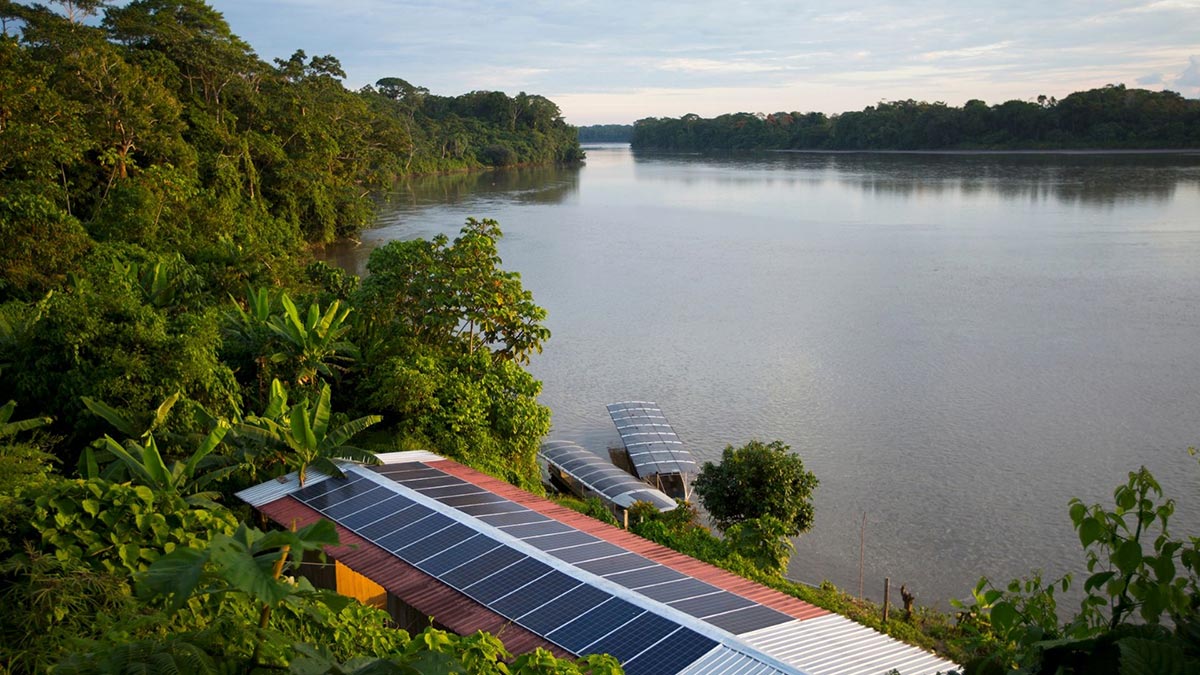
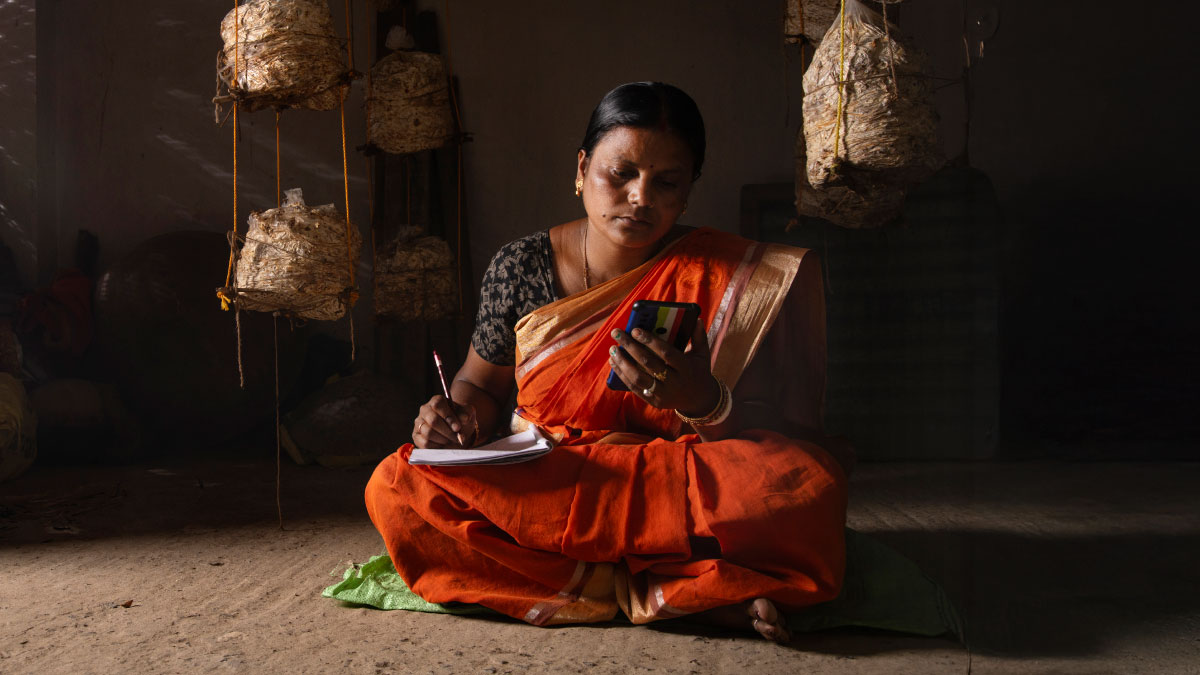
The community solar center in Sharamenta.
Photographer: Martina Avilés
21st century connectivity meets traditional values
Lately, Kara Solar has been deploying Cisco Meraki networking infrastructure in river communities. Combined with solar energy, it enables low-cost connectivity and opens new horizons for education, commerce, and all the other advantages of network connections.
“Kara Solar helped facilitate the installation of Meraki Cisco technology,” Canelos said. “And that also helps monitor and control internet use. That was done to protect the children of the community. So, Meraki allows the local coordinator of the internet systems to shut off the internet at certain times, to understand who is using the internet, to basically use the internet in ways that are culturally consistent.”
“Amazonians want to be part of the global conversation,” added Utne, “and they have every right to be. So, we’re trying to do anything we can to facilitate that and support new opportunities for them.”
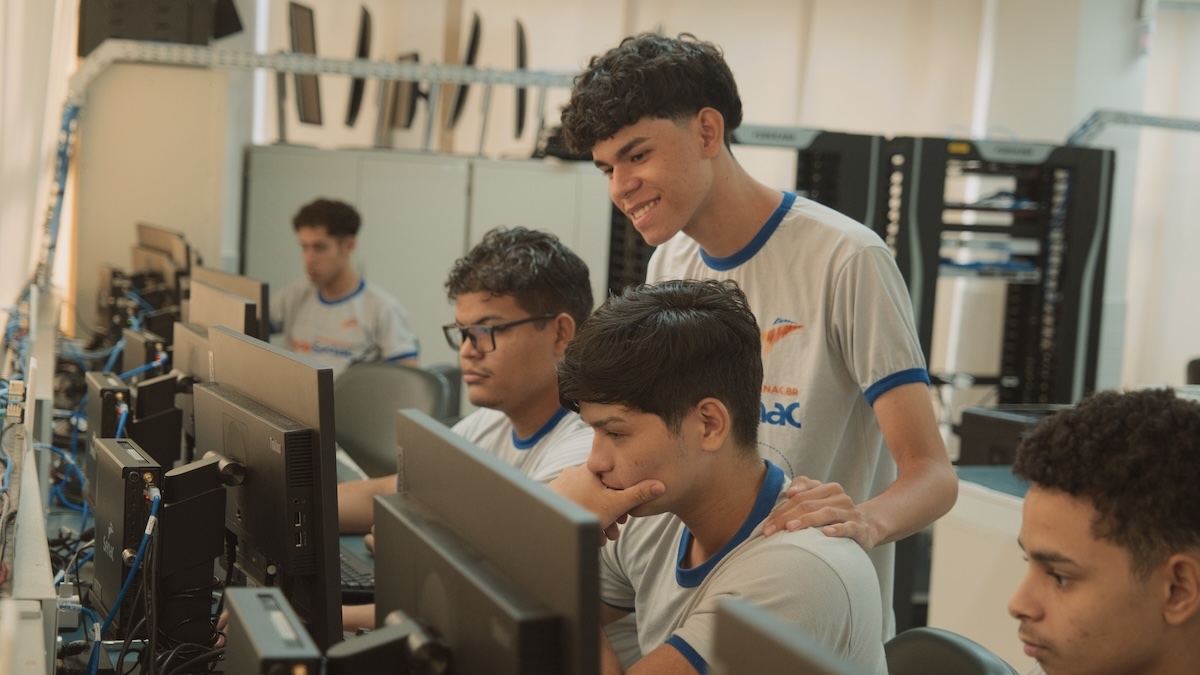
That's why Kara Solar is exploring the Cisco Networking Academy. Among the largest digital skills platforms in the world, Networking Academy has impacted more than 28 million learners since 1997, with skills and gold-standard certifications in networking, security, AI, and more. And it is seen as a great way to expand the capabilities of local technicians — for Kara Solar and for businesses that have yet to be imagined.
“There's a real opportunity to expand on education,” said Leif Maynard, Kara Solar’s communications and development manager, “to build deep understanding of networking and data.”
As Canelos added, the passion to learn new skills runs deep.
“There are many high school students in these communities that would love to learn more about how networks work,” he said, “in order to help manage these networks and ensure that the systems are self-managed, and to explore new opportunities.”
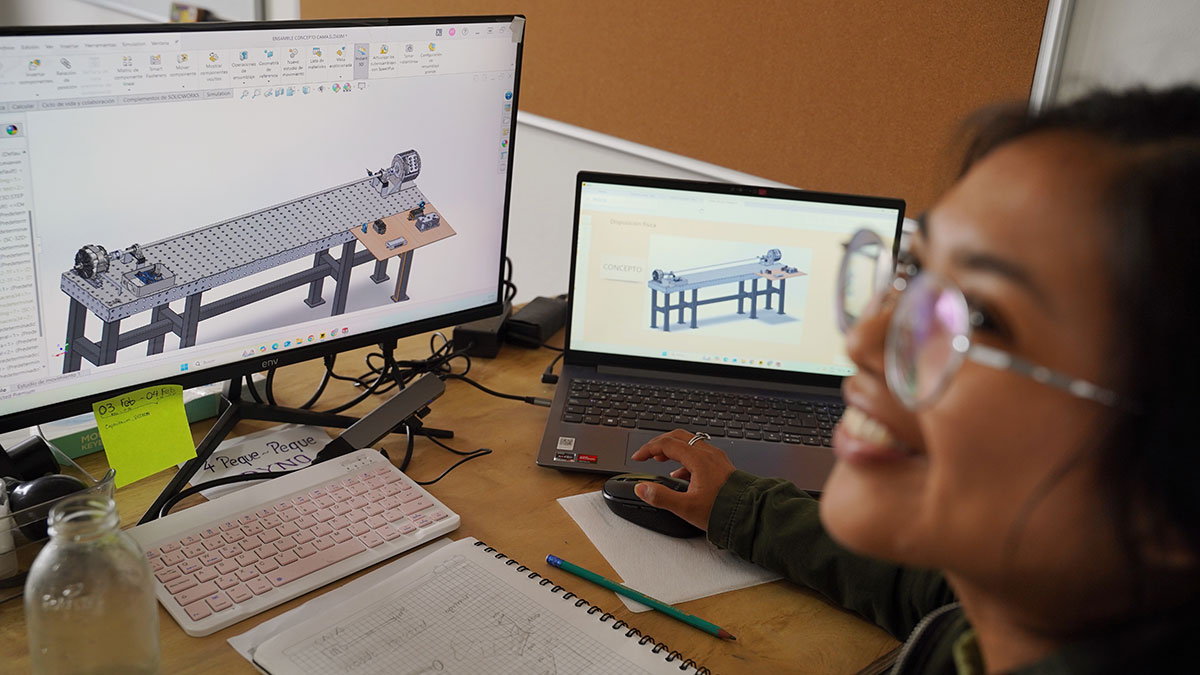
Roberta Troya, engineer, working in Motores Amazonas workshop in Quito.
Photographer: Evan Marcus
Building resilience and independence also extends to manufacturing.
The Kara Solar team is excited about a new effort to manufacture its own 5 kW electric boat motors. In a region with an estimated 1 million gas-powered boat engines, it’s an important first step.
“Our dream is to build 20 small manufacturing facilities across the Amazon,” Utne said, “each doing the computer numerical control (CNC) machining, the 3D printing, the laser welding. And creating jobs and know-how in all these difficult to reach corners of the Amazon.”
Creating jobs and opportunities, while supporting fragile ecosystems, is a future-facing strategy that aligns with Cisco’s purpose: powering an inclusive future for all.
“Connecting those communities to the internet is key,” said Gabriel Bello Barros, head of Cisco Networking Academy Brazil. “It’s essential that they preserve their communities and their traditions but also being able to access modern services. To me, this is a digital inclusion at its best.”