How Externships Empower the Next Generation of Innovators
3 Minute Read · 5 Minute Listen
Early in my career, I had the opportunity to work at Amazon as a Tech Analyst. I wasn't the smartest person in the room, and I certainly didn't have all the answers.
But what I had was exposure — people who trusted me with real problems, mentors who challenged me to think differently, and an environment that showed me technology wasn't just about writing code. It was about solving problems that matter.

That experience shaped my career. More importantly, it shaped how I think about creating opportunities for others.
This July, I stood before a classroom of high school students from diverse backgrounds participating in the Cisco High School Externship of 2026. This immersive program offers students hands-on experience with technology, innovation, and careers in the tech industry. Participants build products from scratch while developing an innovator’s mindset through mentorship and collaborative projects. The program empowers them to transform curiosity into confidence and create solutions for real-world problems.
As I looked across the room, I saw a younger version of myself.
Curious. Ambitious. Unsure where their talents would fit.
Each student carried the same questions many of us had at that age: What excites me? Where can I make an impact? What does the future of technology look like?
Instead of beginning with product features or technical jargon, we started with a simple question:
What problem is worth solving?
Steve Jobs once said that great products don't start with features — they start with the user. That idea became the foundation of our session.
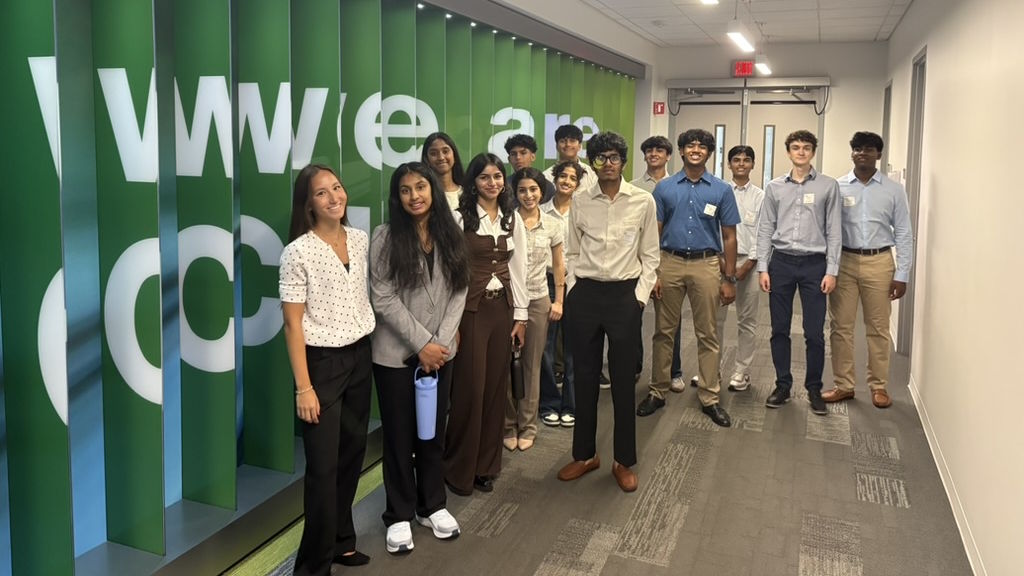
We explored cybersecurity, cryptography, artificial intelligence, and product management as integrated tools to solve real customer problems. Together, we broke down how great products are built by understanding people first and technology second.
Then something interesting happened. The students started thinking like product managers.
During their capstone projects, they challenged assumptions, asked difficult questions, and designed solutions for real Cisco product problems. Their ideas weren't limited by years of industry experience. They were driven by curiosity and creativity.
That reminded me of something I believe deeply:
The next generation won't simply inherit technology — they will redefine who gets to build it.
For years, many advanced technologies have been available only to organizations with significant resources and expertise. But every generation pushes that boundary further. Today's students learn faster, build faster, and iterate faster than ever before. With AI lowering barriers to innovation, the distance between an idea and a working product continues to shrink.
The future belongs to people who can combine empathy with technology to solve meaningful problems.
That is why programs like the Cisco Externship matter.
More than simply introducing them to cybersecurity or AI, the externship gives students something far more valuable: The confidence to believe they belong in the room where the future is being built.
Years ago, someone opened a door for me. This time, I had the privilege of opening that same door for the next generation.
If even one student leaves believing they can build technology that improves someone's life, then the impact of that classroom extends far beyond a single day.
And that is how the workforce of tomorrow begins — not with a job offer, but with an opportunity.
Related links


Related Content