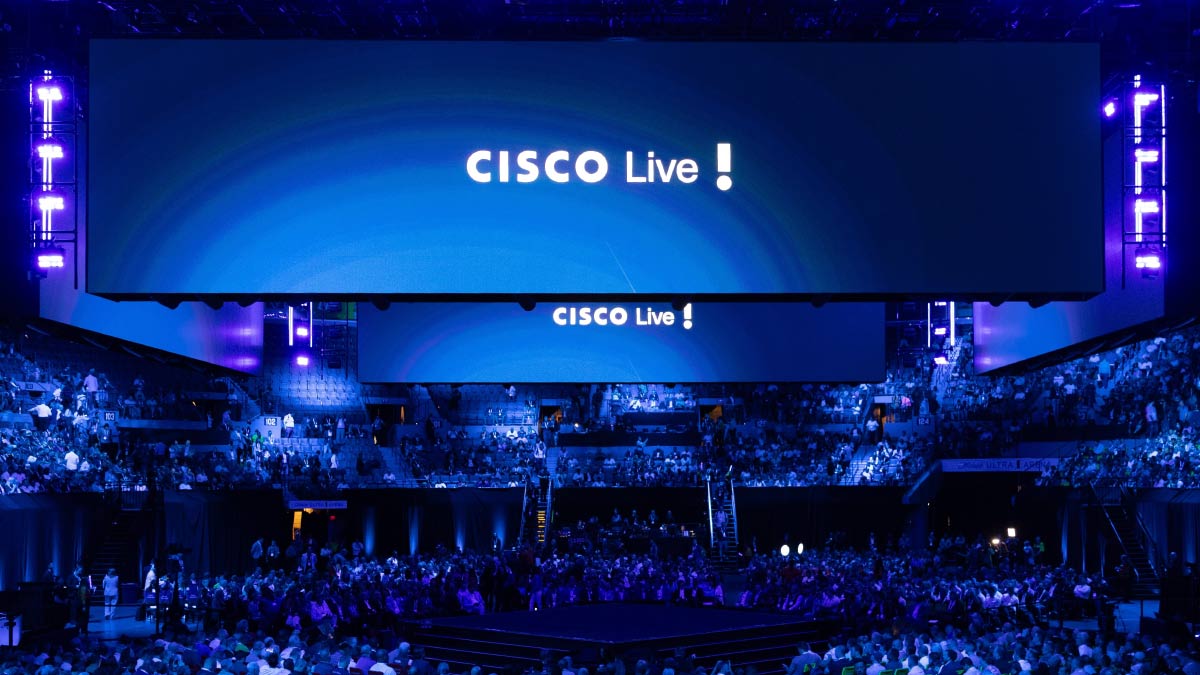



As Cisco CEO Chuck Robbins exclaimed from the Cisco Live stage in Las Vegas this week, “the network is truly more important than the node.”
It’s a lesson that goes back to Cisco’s founders, who more than 40 years ago connected computers with the first router, opening massive possibilities for networking, collaboration, and our modern world, from the internet to mobility to cloud and beyond.
And It’s never truer than now, as agentic AI represents perhaps the biggest tech transition of all. And at a time when only 15% of organizations feel fully confident to deploy AI, Cisco is delivering the critical, secure infrastructure to accelerate the journey to AI value.
“The buzz we hear around GPUs is incredibly important,” Robbins continued. “The models are incredibly important. Inference is incredibly important. The apps, the agentic revolution, they're all nodes though, and they're super powerful independently, but they're massively more powerful when they're networked.”
Speaking before more than 20,000 customers, partners, tech analysts, and press at the company’s premier annual event, Robbins clarified Cisco’s focus on building AI-ready data centers, resilient infrastructure, and future-proof workplaces — with key announcements around Cisco Cloud Control, Cisco Live Protect, Cisco IQ, and agentic security, to name a few.
All are part of a comprehensive portfolio, integrated with Cisco’s platform advantage, and powered by AI to meet new challenges.
“We have a unique capability,” Robbins emphasized, “because we have this full stack, from silicon to the platform and with security and observability — to help you implement the infrastructure that you need for your organization to take advantage of this wave.”
Cisco is enabling that wave with innovation at a pace that’s never been seen before — essential at a time when AI-driven network traffic is expected to triple in three years and AI-powered cyberthreats gain new levels of sophistication, especially in a post-Mythos world.
“Today I'm really proud,” Robbins stated. “I stood on stage a few years ago and talked about how we were going to increase the pace of innovation. And the teams have done just that, maybe to a point where it's hard to absorb sometimes.”


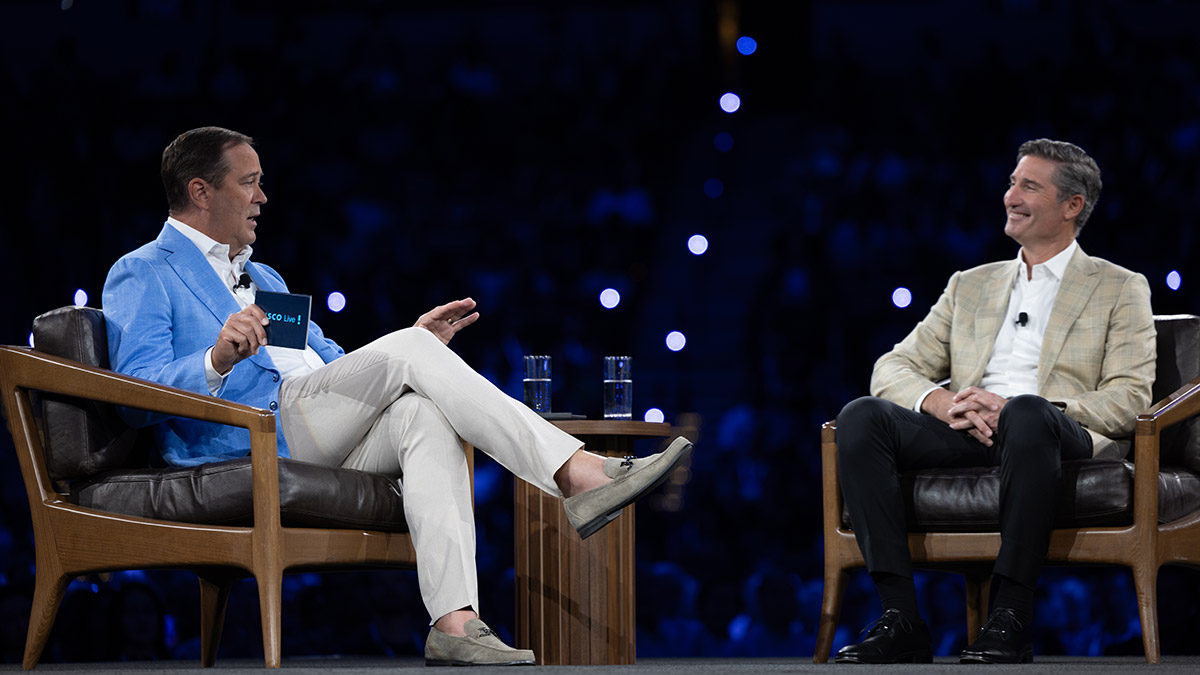
Starbucks Chairman and CEO Brian Niccol (right) joins Cisco Chair and CEO Chuck Robbins on the Cisco Live main stage.
AI for real-world outcomes
As Robbins emphasized, AI is all about delivering outcomes. To illustrate how, he welcomed Starbucks Chairman and CEO Brian Niccol.
Niccol explained how a massive global organization (and longtime Cisco partner) like Starbucks is focused on customer experience. So, having the best technology to help make it seamless — from the back offices and supply chains to the stock shelves and personalized customer interactions — is essential.
“The way we're approaching AI,” he said, “is we're looking at all of our processes from the beginning to end. Looking at where are those areas where it's digital and it's repeatable, and then we ask the question, could we be using technology or AI in this part of the process?”
When AI meets supply chains, for example, individual Starbucks locations can know what to stock and when, as AI can predict just what’s needed.
“We're spending a lot of time right now on supply chain forecasting,” Niccol continued, “and scheduling in the stores because the predictability has just gone way up. We can have high confidence, so that our store managers don't have to mess around with trying to figure out, should I have 10 bottles of water in the cold case or 15 bottles of water in the cold case because that AI model will know, if it's Tuesday you're on the East Coast and it's 80 degrees, this store goes through this amount of water.”
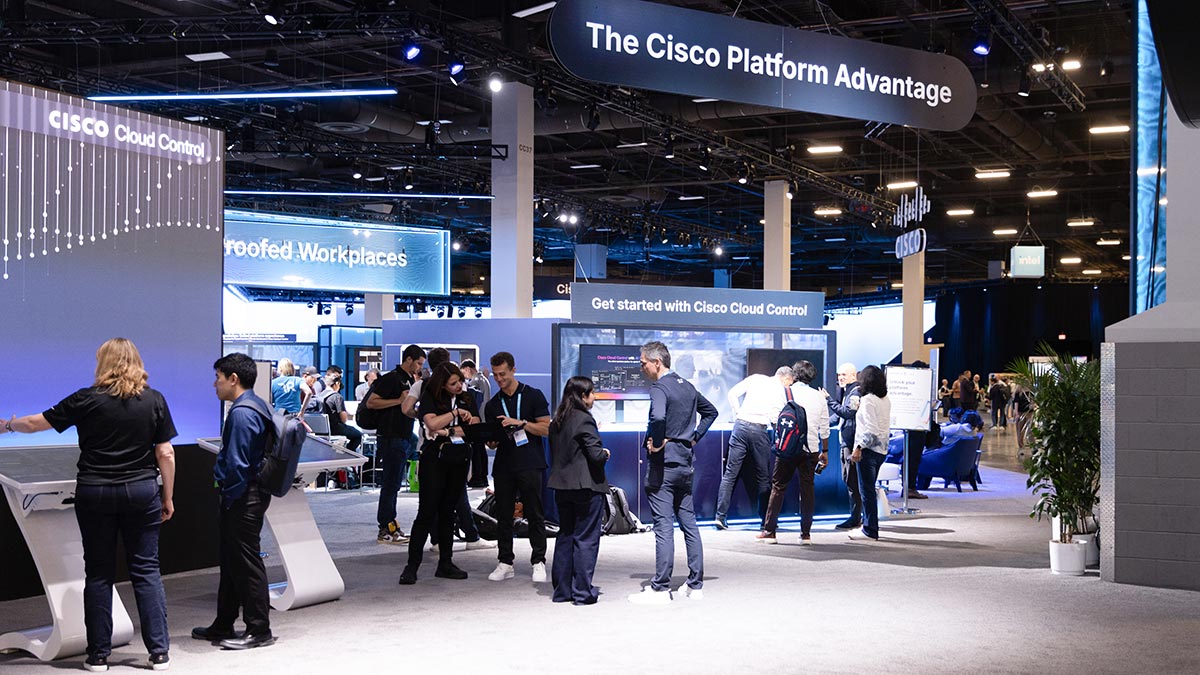
Cisco Cloud Control display in the Cisco Showcase.
Simple but ultra sophisticated: Cisco Cloud Control
Jeetu Patel, Cisco president and chief product officer, then spoke of the overwhelming 24/7 demands on the network from the upsurge in agentic AI — and the networking and security “supercycle” that’s driving steep acceleration in innovations and investments.
“These agents are operating at machine speed,” Patel said. “So, what you're starting to see is the sheer volume of infrastructure that's going to be needed is meaningfully higher than what we've had in the past. The way I like to think about this is humans click, but agents swarm.”
“Cisco,” Patel added, “is at the center of addressing infrastructure scaling requirements as well as security requirements for AI.”
Patel then shared just a few of the amazing solutions that will help organizations meet the demands of this massive technology transition, including the latest generations of the programmable, powerful, lower-energy Silicon One chip architecture — including the G300 that is enabling scale-across capabilities, connecting data centers thousands of miles apart to meet the demands of AI.
In answer to the complexity and plethora of disparate solutions that customers are dealing with, Patel introduced Cisco Cloud Control, a revolutionary step forward in platform integration that enables humans and agents to run critical infrastructure together.
“Cloud Control is at its core simplicity, without losing the sophistication of Cisco,” Patel said. “Literally all the products that you know from Cisco and love will be managed from Cisco Cloud control.”
Beyond that, it’s part of an open ecosystem, so it will work with many third-party solutions. And with Codex integrated, teams can create their own apps within it. So, all a customer’s key solutions, agents, security, observability, troubleshooting, and monitoring are managed from one unified, intelligent, interactive source.
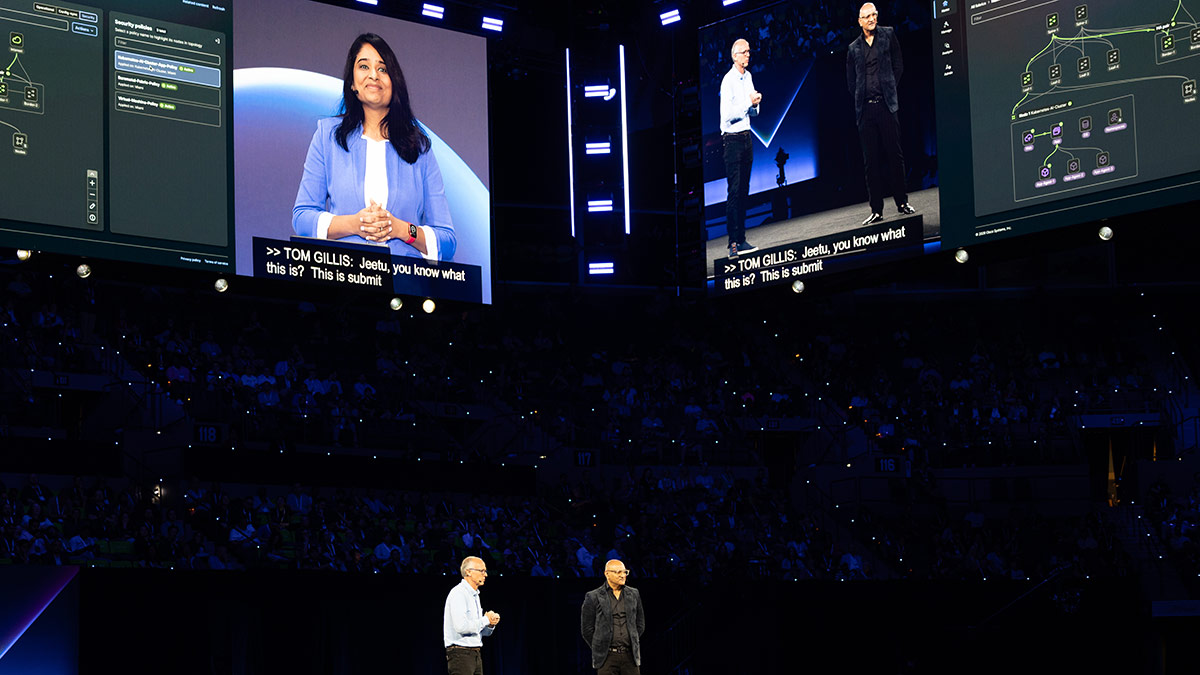
Swetha Velamuri, director of product management in Cisco's Data Center Business Unit, demonstrates Cloud Control's capabilities.
In Day Two product demos — representing AI-ready data centers, future-proofed workplaces, and resilient infrastructure — Cisco leaders put Cloud Control through its paces, demonstrating how it vastly simplifies, with one unified view to manage all assets.
For example, Tom Gillis, senior vice president and general manager of Cisco’s Infrastructure & Security Group, and Swetha Velamuri, director of product management in the Data Center Business Unit, demonstrated how Cloud Control integrates seamlessly with Cisco Live Protect, to detect vulnerabilities in infrastructure, and proactively respond.
Then Patel brought up Anurag Dhingra, SVP and GM of Cisco’s Enterprise Connectivity and Collaboration Group, to demonstrate how Cloud Control manages autonomous agents and ensures that their actions are safe. This is especially needed as agents take on deep reasoning and decision making. Cloud Control provides an exceptional ability to set policy and test agents, via digital twins, to confirm that those agents are doing just what users want.
“That is very important,” Dhingra expressed, “because we want customers to be able to choose what they delegate and when they feel confident in delegating. And these tools that I'm going to show you in a demo, they build up that confidence.”
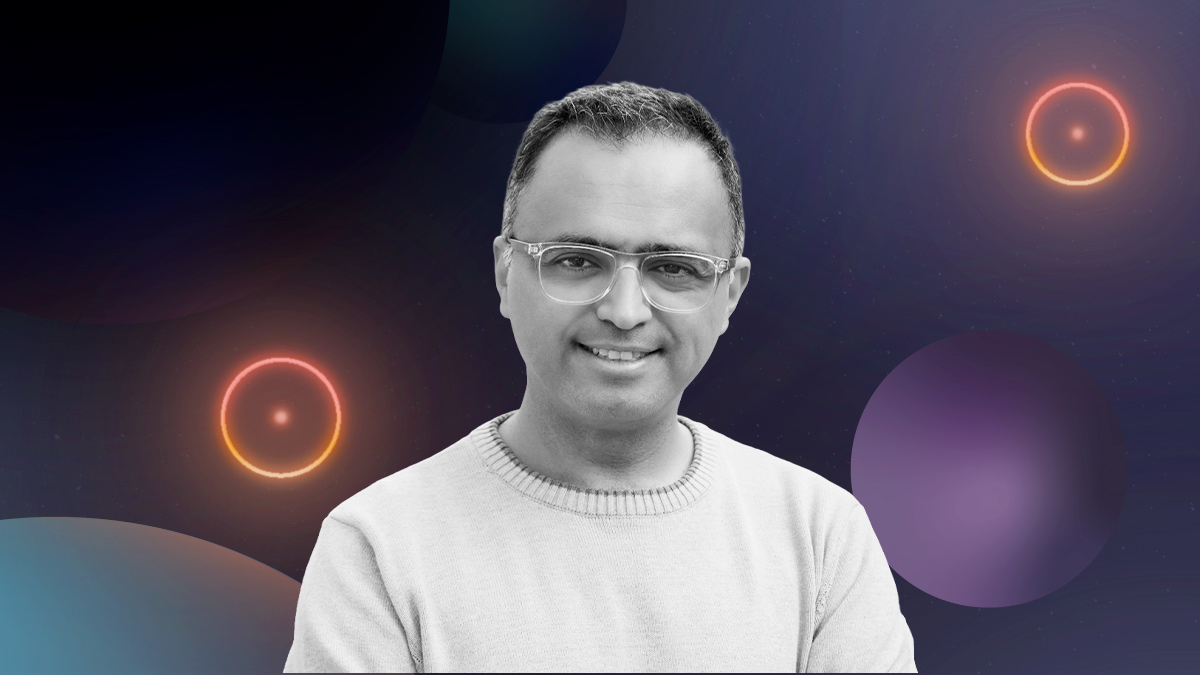
In a third demo, Kamal Hathi, SVP and GM Splunk business unit at Cisco, highlighted what happens when Splunk and Cloud Control join forces.
“Cloud Control is amazing,” he said. “But adding Splunk in will supercharge what Cloud Control can do. Unifying data across application, network, infrastructure, even AI all in one place is what's really impactful.”
Agentic AI in action: Cisco IQ
Of course, to make Cloud Control as interactive, powerful, and simple to use as possible, it needs its own agentic layer. And Liz Centoni, Cisco’s EVP and chief customer experience officer, shared the groundbreaking integration of Cloud Control and Cisco IQ. “AI-enabled attacks,” she warned, “can now map your entire network in minutes at machine speed, finding those vulnerable decade-old devices. So human-speed reactive defense is no longer viable. This is the Mythos moment, and the question is, how are you meeting it?”
Part of that “Mythos moment,” Centoni continued, is a “patch avalanche,” as teams struggle to locate and respond to vulnerabilities hidden in their systems.
“That friction, the spreadsheets, the guesswork, the time lost between before a single line of troubleshooting is done,” Centoni continued, “that is what Cisco IQ was built to eliminate.”
Centoni then brought up a customer, Scott Malone, VP of IT Infrastructure at GEODIS.
“For the first time that I can remember, I have complete landscape visibility into all of the vulnerabilities and most importantly, a clear action plan,” he explained. “When I first saw what Cisco IQ surfaced, it felt too good to be true. And then I just realized this is what it looks like when the system actually knows your environment.”
As Patel emphasized, it’s another example of integration and simplification — and the empowerment they enable.
“It’s the power of the platform coming into play,” he said, “because every single product you’ve seen is now executed right within Cloud Control. You have cross-domain telemetry, you can troubleshoot, you can set policy, you can observe, you can go across data center, future-proofed workplaces, and have infrastructure resilience. So that's the commitment that we have to you: We're going to simplify operations and completely reimagine it for you.”
“This is an exciting time for Cisco,” Patel concluded. “More importantly, we hope it's an exciting time for you as we partner with you and we hope that these capabilities that we're building allow you to do your life's best work for your customers."