Saving the Environment, One Sea Turtle at a Time
3 Minute Read · 5 Minute Listen
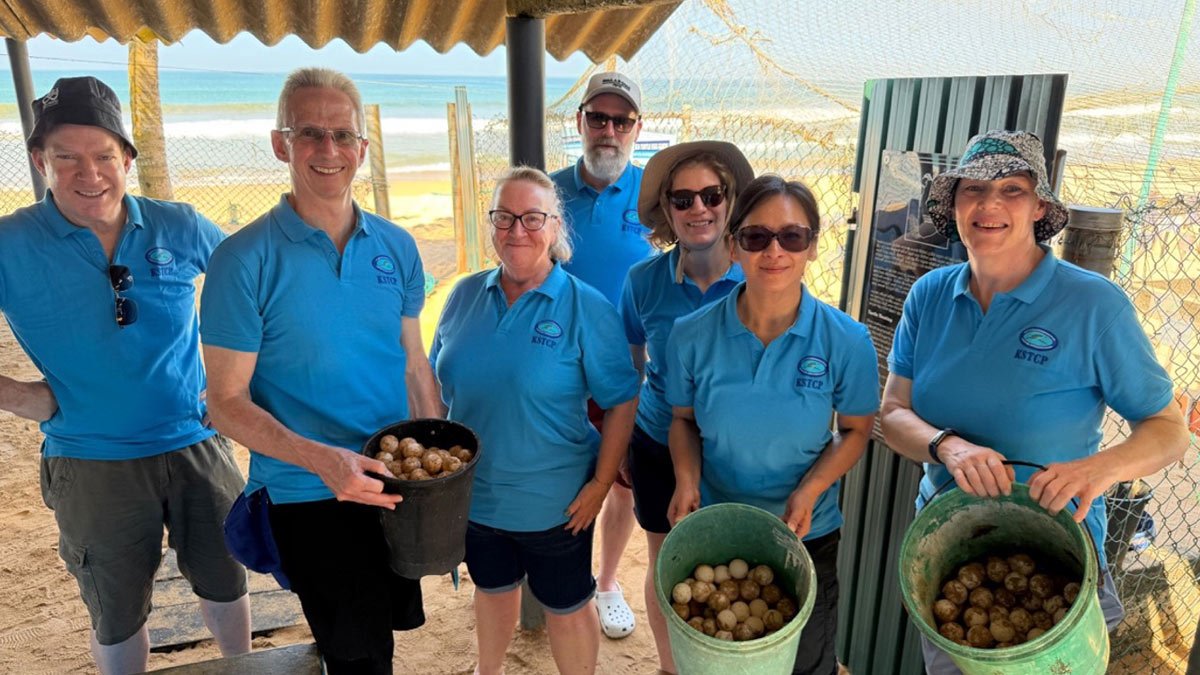
Earlier this year, I had the privilege of joining a team of Cisco colleagues to volunteer at the Kosgoda Sea Turtle Conservation Project in Sri Lanka. Many of us had previously volunteered together at the Imire Rhino and Wildlife Conservancy in Zimbabwe.
However, we quickly learned that the world of marine conservation is a lot more complex and demanding than the typical “voluntourism" brochures suggest. These glossy advertisements often attract people looking for a photo op, but the reality is much grittier — I certainly wasn’t prepared for the physical intensity of the work.
Not every "sanctuary" is the same
It’s easy to walk into a place, see turtles in tanks, and think, "How lovely!" But the truth is, real conservation is about the work you don’t see. Many places on the coast are actually businesses that keep turtles in captivity for show.
Our sanctuary was different. It was a hub of active rescue and rehabilitation, and we were there to ensure these turtles had a fighting chance at survival. In nature, only one in 1,000 hatchlings survive to adulthood, but through this sanctuary’s intervention, that rate jumps to one in 100.
For example, we learned that the sanctuary proactively buys eggs from local fishermen — who would otherwise sell them on the black market — to incubate them safely. That’s the kind of direct, high-stakes intervention that saves turtle populations.
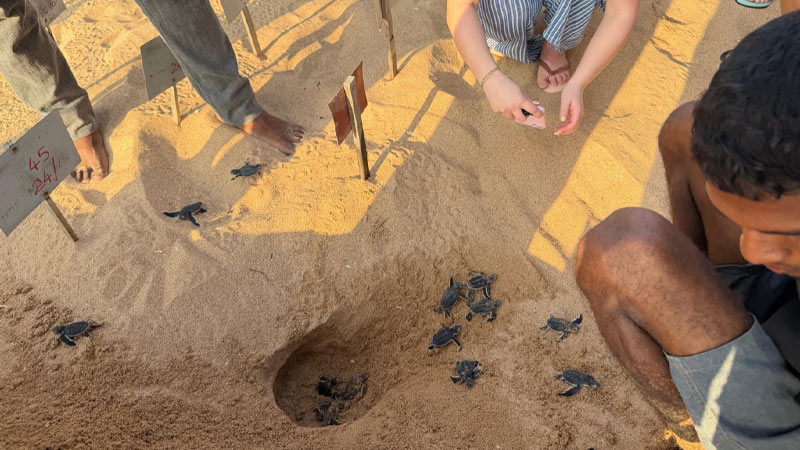
Turtles hatching after incubating in the sand for 50 days.
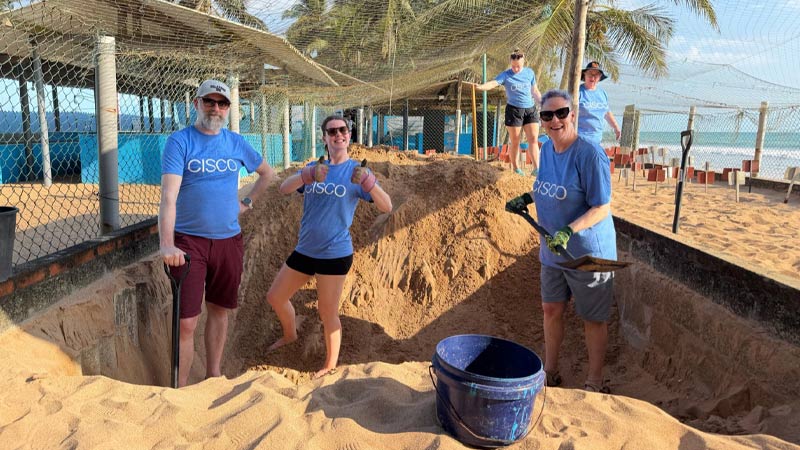
Jason Freeth, Louise Williams, and Sam Moylan-Heydt dig out the old hatchery to get it ready for future eggs.
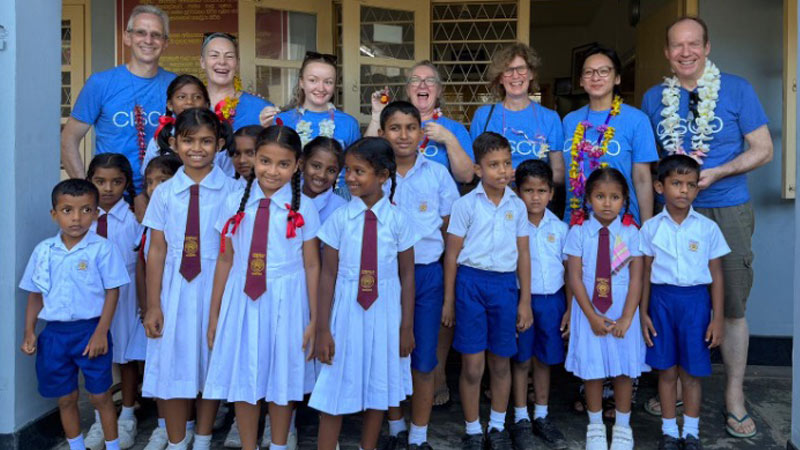
A visit to a local school reminded us that conservation and community go hand in hand.
The science of survival
We received a hands-on crash course in turtle biology. We learned that the temperature of the sand dictates the sex of the hatchlings (cooler sand results in males, and hotter sand results in females!). We helped manage this delicate balance by tagging and monitoring nests.
Our days were filled with the essential work that keeps the sanctuary running:
- The hatchery grind: Clearing out roots and shell debris from old hatchery sites to prepare for new turtle hatchlings.
- "Spa" days: Scrubbing tanks and gently cleaning the turtles to keep algae and disease at bay.
- Nutrition management: Preparing food (including baby tuna — heads and tails included!) to ensure the turtles were properly fueled for their eventual release.
Sharing the knowledge
We also acted as guides for the visitors to the center. It felt ironic at first, as we were only a few days into our own learning journey, but it’s amazing how quickly we learned.
When we presented the facts with genuine passion, the information really engaged the visitors. In fact, we were later featured in a five-star Google review for our friendliness and knowledge! It was a great reminder that you don’t need to be a lifelong expert to be an effective advocate for a cause.
Investing in the future
While the turtles were our primary mission, we also supported the local community with a massive haul of school supplies. Packing over 300 school bags in the sweltering heat was a workout in itself!
We visited two local primary schools and went classroom to classroom, handing out bags to each child. Seeing their faces — and being welcomed with beautiful flower garlands — was a total heart-melter. It was a powerful reminder that conservation and community go hand in hand: You can't protect the environment without supporting the people who live in it.
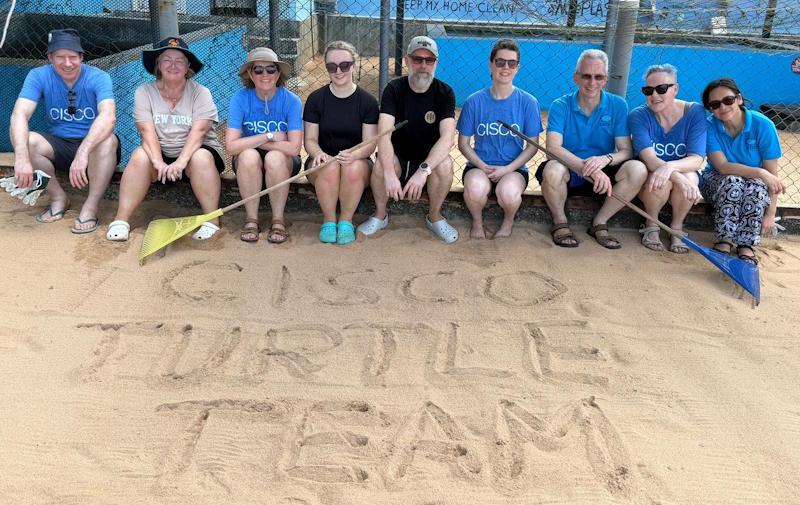
Hard work, big (environmental) payoff
When you spend your day knee-deep in sand or scrubbing tanks, you realize that conservation isn't always glamorous. It’s often about the daily, repetitive, and exhausting commitment to the environment. By the time we left, we had buried and tagged hundreds of eggs — our "Cisco Babies" — and cleaned countless tanks.
As we celebrate Earth Aware Month, I’m coming back to my desk with a lot more respect for the people who do this every single day. Using my Time2Give days for this project was an eye-opening experience, and it’s a firm reminder that we should always make sure the causes we support are driving real impact.
How have you helped conserve your environment? Let us know in the comments.
Employee resources
Related links


Related Content