


Literature, philosophy, and psychology might not seem crucial in the AI era. But they could loom large.
That’s because as AI rises in power and autonomy, humans will need to be the final arbiters of what’s ethical, wise, and right for society. All of which demands the creative, cognitive agility that a grounding in humanities helps build.
So believes Dr. Guy Diedrich, SVP and global innovation officer at Cisco, where he also leads Cisco's Digital Impact Office. DIO is responsible for mass digitization and skilling initiatives, including the Country Digital Acceleration (CDA) program and Cisco Networking Academy.
In a fascinating discussion, Diedrich shared his thoughts on the deep need for humanities in a rapidly changing technological age — and how they can be an advantage for leaders and organizations.
Thank you, Guy! Let’s start with your thoughts on the profound pace of change today.
Thanks, Kevin. We've never seen innovation operate at this speed before. The industrial age lasted a couple hundred years, the information age 40 plus years, the digital age 15 or so. And now we're in what I would term the AI micro age, where AI is getting embedded in everything as we speak. In time, it's going to be ubiquitous; it’s going to be invisible. And about that time, we're going to be transitioning to the next micro age, which is the quantum age.
You have a somewhat counterintuitive argument concerning the types of skills that will be needed in this new era.
It may seem counterintuitive, but to me it’s self-explanatory. The technical skills are critical. No question. Yet we think that as we get more and more technically advanced, that will mean more technical skills will be required. When in fact AI is taking over a lot of the early stage, more rudimentary technical skills. So, what I am suggesting is that when you have access to almost all the information in the world at your fingertips, what's going to be the most important skill moving forward? It's going to be around systems thinking, data literacy, but also ethical judgment and the ability to collaborate across disciplines. And that's the domain of the humanities, something that when I was in academia we started to see fall by the wayside.
So, the more machine-driven the world becomes, the more those humanities skills will stand out?
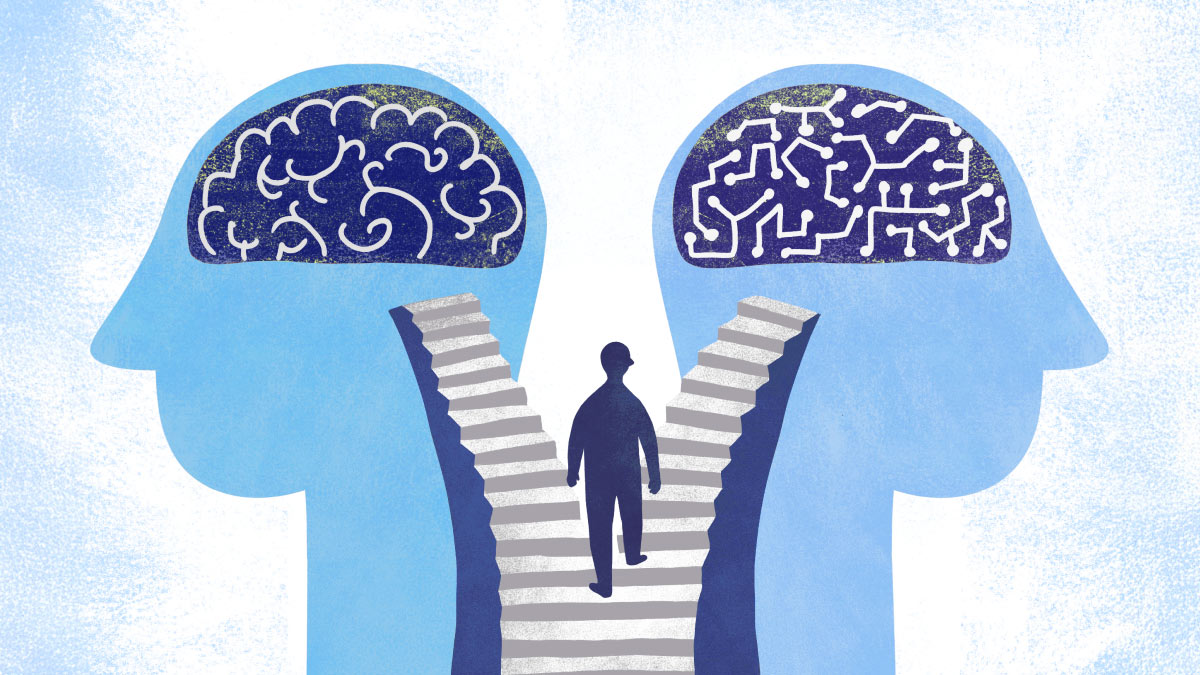
Yes, the more artificial the intelligence, the greater the need for the humanities to be a part of our decision making. It's not going to be about “can we?” Because in most cases the answer to that question will be yes. The question will be, “should we?” And that's very much in the domain of the humanities — critical thinking, problem solving, philosophy, psychology, sociology, these areas that have somewhat been forgotten.
So, it’s not just about reading, say, Tolstoy or Descartes, but the critical thinking that they, or any study in history, literature, philosophy, art, etc., can offer.
Yeah, I think it's about cognitive muscle. We have tremendous technical muscle, but we also need to have intellectual range, to think critically about the decisions that we're making now in our technical world.
Because no matter how powerful AI may seem, it will always have its limits.
AI doesn't tolerate ambiguity well. It doesn't question its own thinking. And it doesn't know how to communicate with nuance. And that is the domain of the humanities. To put it succinctly, the humanities don’t give you answers, they give you better questions. And I think that's what's going to have to emerge, our ability to ask better questions, the right questions. I think it's going end up being one of the most valuable skills moving forward.
AI agents are poised to become integral team members. What are the implications for leaders, and how can humanities help them?
There is a fundamental change in leadership that’s happening in real time. You're not just managing people; you're orchestrating a hybrid team of humans and machines. And it raises so many questions that we have yet to answer. An AI agent may recommend the most efficient solution. But is it the most just? Is it the one that preserves human dignity? Is it the one that is the right decision to make in context, culturally, given the condition of the people that are going to be impacted by that decision. The best leaders moving forward are going to have the moral reasoning frameworks that aren't necessarily paramount in our education system right now or in our corporate environments. And how they distinguish themselves from mediocre leaders, will be their ability to navigate ethical complexity with wisdom, maintaining human dignity. We have to be able to leverage AI without losing our humanity.
Cisco has been a pioneer in this direction.
Yes, we're doing that here at Cisco through our Responsible AI Framework. It’s jump starting that dialogue. We're being very proactive, I think, in acknowledging that AI isn't the answer to everything. AI is going to give you the answer to just about everything. But it's just going to be an answer. It may not be the answer. And it's going to take a humanistic approach to come up with what are the best answers.
Cisco Networking Academy is empowering literally millions of future workers around the world. Without teaching humanities directly, can it still integrate a lot of these ideas?
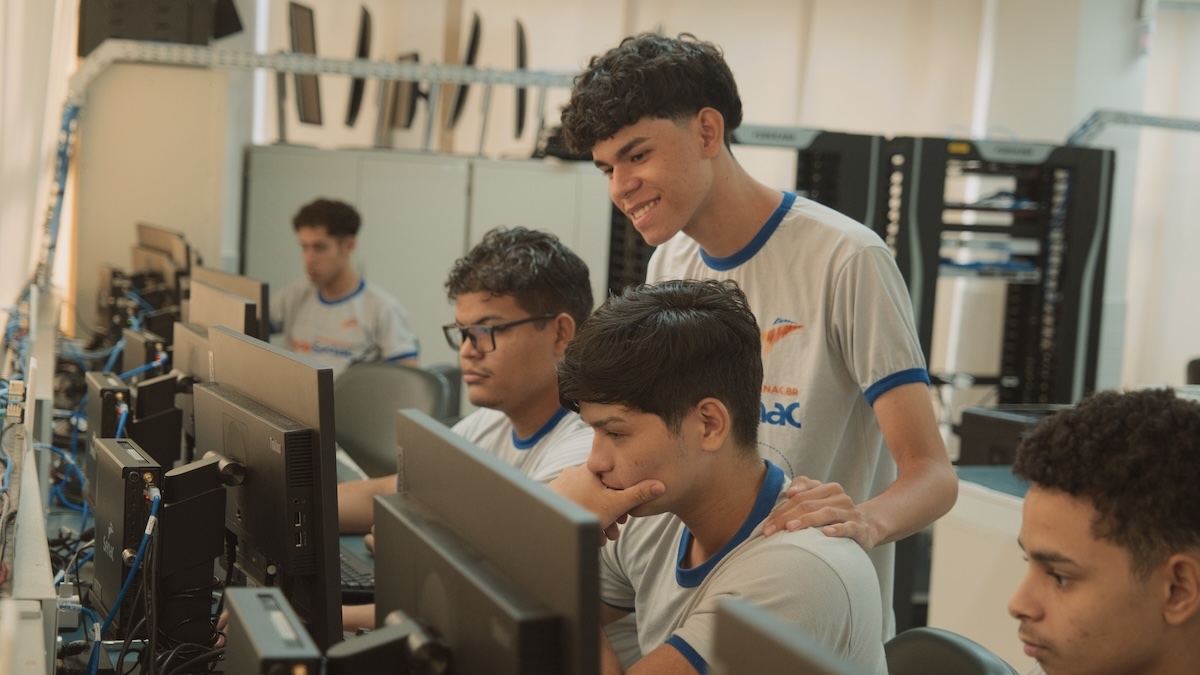
Yes, we're not just preparing students for IT jobs; we're preparing them to be problem solvers in an AI-augmented world. When you take on solving the problems associated with a network, when you take on the problem of defending against a creative hacker, that demands creative problem solving. Certainly, you have to have the technical knowledge. But the humanities, the problem solving, the creative thinking, they enter into it as well.
Networking Academy has a big presence in the developing world, including Africa. What are the implications there?
The median age of the population living on the continent of Africa is 19. Think about that. Most people would think that that's a problem. But in fact, it may be their greatest asset. Because those 19-year-olds are adapting to AI and to this brave new world faster than any other demographic. And they're hungry and they're creative, and they work incredibly hard and they're very interested in leapfrogging other nations and continents around the world. What they need is infrastructure, what they need is investment, what they need is skilling, all of which Cisco is helping with.
Wherever you are, there’s a lot of change coming.
The World Economic Forum came out with a report that said 92 million jobs in the next few years are going to be displaced because of AI and digitization, but 170 million new jobs are going to be created. And so, it's not just our obligation as technologists, academics, and researchers to reskill those 92 million that are losing their jobs for NO fault of their own. It’s our job to prepare them for those jobs that will be created. That AI native group is never going to stop learning. It's going to be constant. Because jobs are going to be reinvented in rapid order. So, be ready to reinvent yourself many times over in your career.
And getting back to our original theme, the humanities are a foundation for navigating that profound level of change.
No question. The earlier that you can embed humanities into your thinking, the more mature your humanistic approach will be in an age where everything seems driven by technology.